


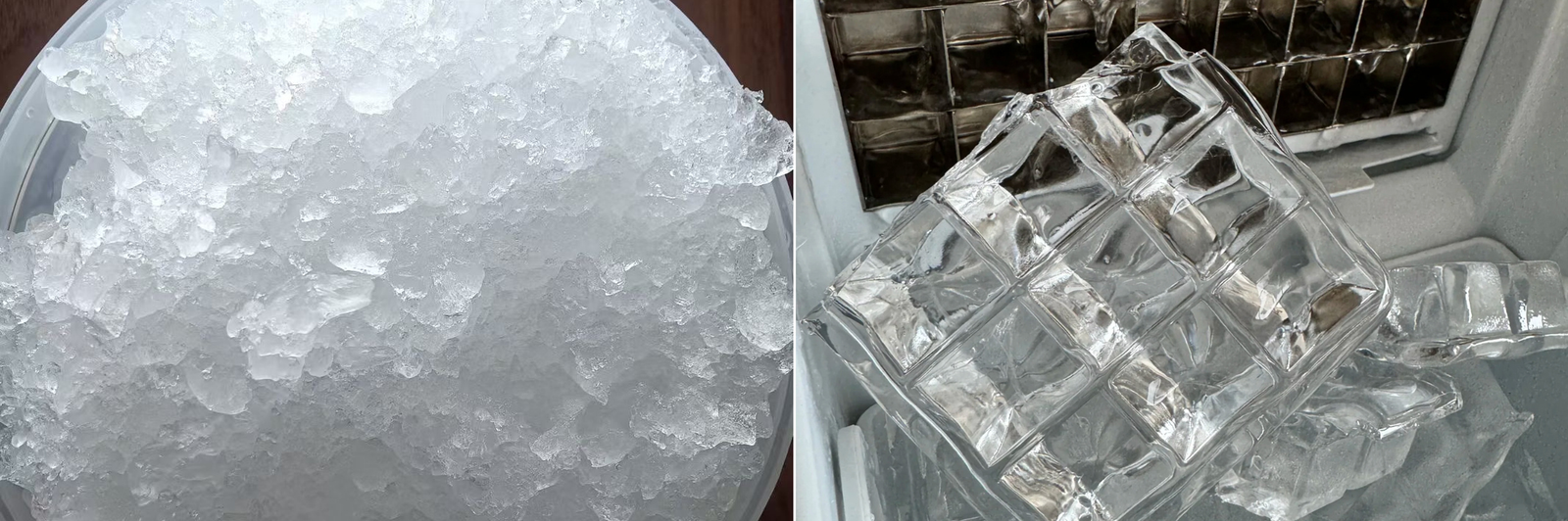
Choosing a laboratory ice machine looks simple until you compare the options. Flake snow ice makers and cube ice makers both produce wet ice at around 0°C, but they behave very differently once that ice touches a sample tube, a reagent bucket, or a transport box. The wrong choice does not just waste money — it can create uneven cooling, slow down workflows, or even compromise specimen integrity. This article compares the two machines head to head, explains where each one wins, and helps you decide which laboratory ice maker fits your facility.
1. Which Ice Maker Should Your Lab Choose?
For most research, clinical, and biology laboratories, a flake ice maker is the default choice because flake ice packs tightly around tubes and vessels for uniform, gentle cooling during ice baths and sample handling. A cube ice maker is the better fit when ice is mainly used for long-duration storage, bagging, and transport, where slow melting and easy handling matter more than full surface contact. Some larger facilities benefit from both: a flaker on the bench for daily work and a cube machine feeding storage and transport needs.
2. What Is a Flake Ice Maker?
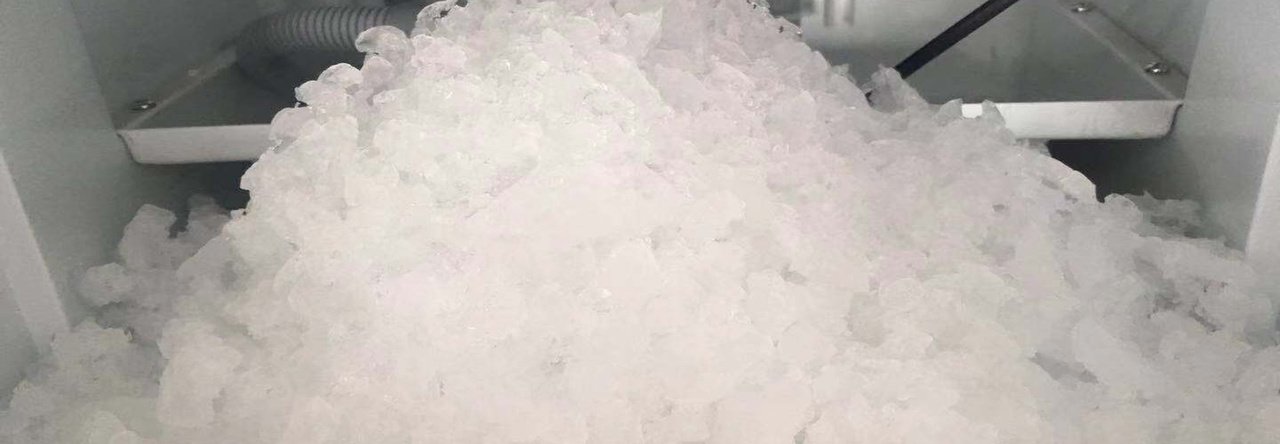
A flake snow ice maker freezes a thin film of water on a chilled stainless-steel evaporator drum. A rotating auger scrapes the ice and pushes it through a cutter, producing soft, flat, irregular flakes about 1.5–3 mm thick. There is no defrost cycle, so the machine makes ice continuously, and the flakes fall straight into an insulated bin. Because the flakes are thin and slightly moist, they flow like snow, settle into gaps, and wrap around containers of almost any shape.

3. What Is a Cube Ice Maker?
A cube ice maker uses a spray or flooded freezing process to form hard, clear, uniform cubes in a mould. After a timed freezing cycle, a short harvest releases the cubes into the storage bin. Cubes are dense with a relatively low surface-area-to-volume ratio, which makes them melt slowly and hold their shape for a long time. They are easy to scoop, bag, and stack, and they keep a cooler cold for hours without producing large amounts of melt water.
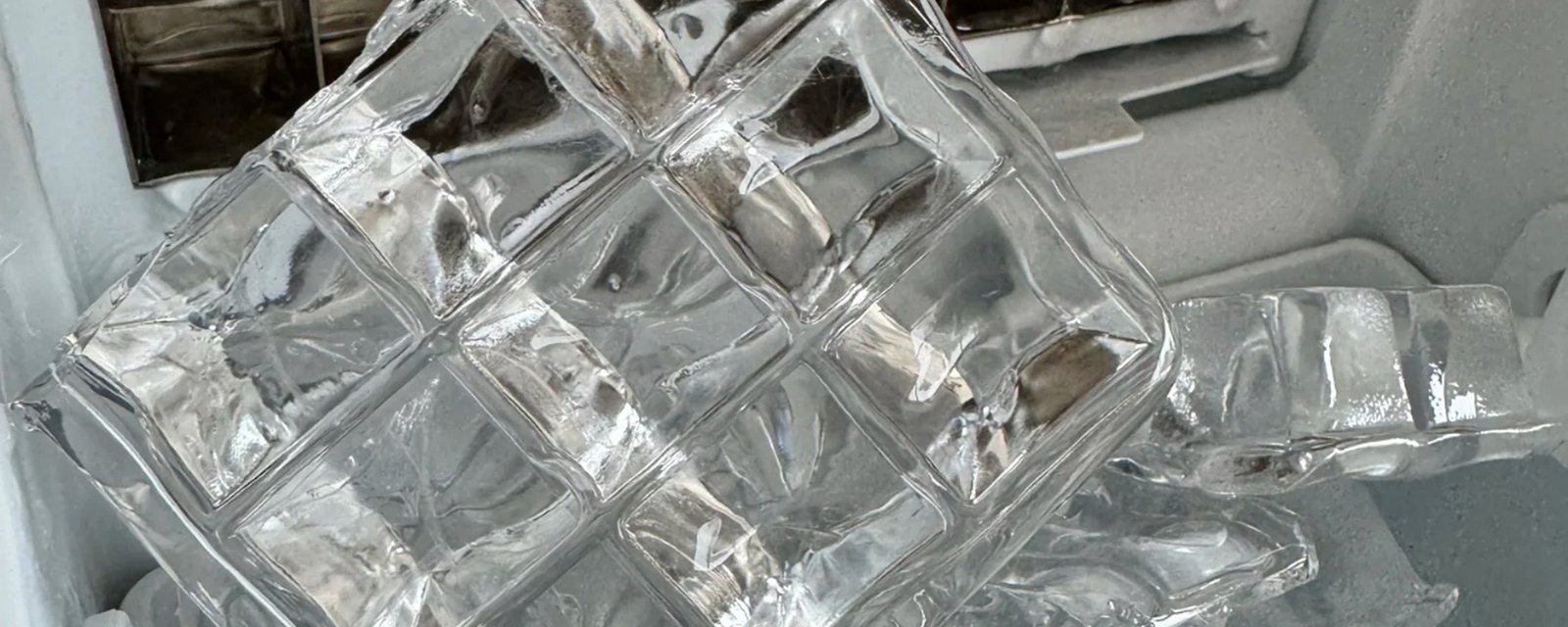
4. Flake Ice vs. Cube Ice: Head-to-Head Comparison
| Factor | Flake Ice | Cube Ice |
| Shape | Thin, soft, irregular flakes | Hard, clear, uniform cubes |
| Temperature | 0–2°C, wet ice | 0°C, wet ice |
| Surface contact | High — conforms to vessels | Low — point/edge contact, air gaps |
| Cooling speed | Fast, even heat transfer | Slower, less uniform |
| Melt rate | Faster (high surface area) | Slow, long-lasting |
| Handling | Packs into any bucket or tray | Easy to scoop, bag, and transport |
| Labware safety | Soft, non-abrasive, no scratching | Hard, can chip glass if rough |
| Best at | Ice baths, bench sample handling | Storage, bagging, long transport |
5. When a Flake Ice Maker Is the Better Choice?
Choose a flake ice maker if your daily work revolves around ice baths and hands-on sample handling. Flake ice fills the entire bucket and contacts every surface of the vessel, so temperatures stay uniform across the sample rather than only where a hard cube happens to touch it. That matters in PCR setup, enzyme reactions, nucleic acid extraction, protein work, cell lysis, and immunoprecipitation, where samples and reagents must hold a stable 0–4°C.

Flake ice is also soft enough to cushion fragile microtubes, conical tubes, blood bags, and freshly excised tissue, with no sharp edges to scratch labware or bruise specimens. Histopathology and surgical pathology labs use it to hold tissue near 0°C before fixation or cryostat embedding, and clinical labs use it to cool labile analytes such as ammonia, ACTH, and lactic acid immediately after collection. If multiple benches need ice at the same time, continuous flake production removes the bottleneck of a shared ice room.
6. When a Cube Ice Maker Makes More Sense?
Choose a cube ice maker when the ice is mostly stored, bagged, or moved rather than used directly in bench-top ice baths. Dense cubes melt slowly, so a cooler or insulated box stays cold for hours with minimal melt water, which is useful for longer internal transport, bulk storage, and facilities that distribute bagged ice across departments. Hard cubes are also easier to scoop and transport without clumping into a solid block.
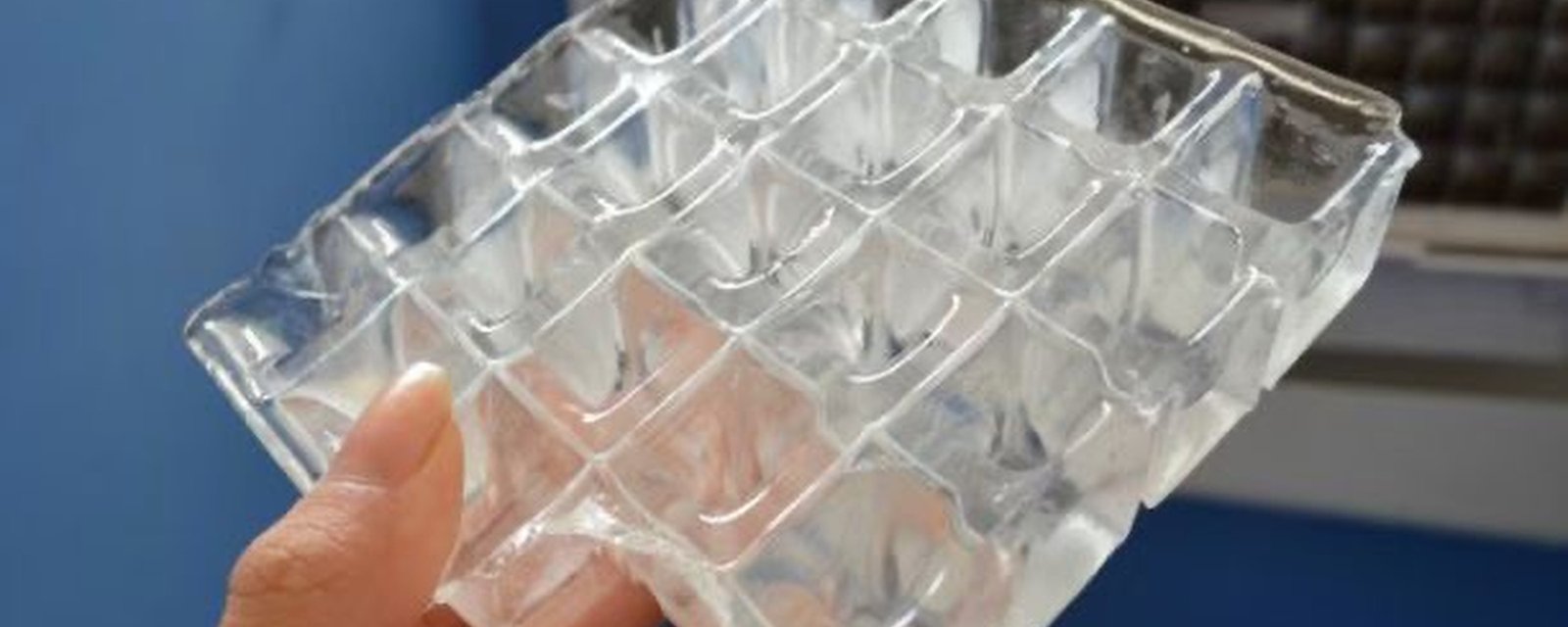
Cube machines are common in multi-purpose facilities, hospitals, and large institutions where one unit serves many departments, including non-laboratory uses. They are less ideal for precision ice baths: cubes touch vessels only at edges and points, leaving air gaps that produce uneven cooling, and they cannot be moulded closely around irregular shapes. If your core work is bench-level sample cooling, a cube machine alone will usually underperform.
7. Key Factors to Consider Before You Decide
- Your dominant workflow. If most ice goes into ice baths and sample trays, choose flake; if it goes into storage bins, bags, and transport coolers, choose cube.
- Cooling uniformity. Flake ice delivers repeatable contact cooling; cube cooling is less uniform and depends on how the cubes happen to settle.
- Capacity and peak demand. Match the kg/24h rating to your busiest shift, and remember output drops in warm rooms. Size the bin to buffer peak use.
- Space and installation. Compare footprints, airflow for air-cooled units, and plumbing for water-cooled models before committing.
- Hygiene and materials. Look for 304 stainless-steel contact surfaces, drainage, and filtration, especially where ice touches biological specimens.
- Running cost and refrigerant. Compare energy and water use, and consider low-GWP refrigerants such as R290 for newer, greener installations.
8. Cost, Maintenance, and Noise: Practical Differences
Procurement cost is only part of the picture. Flake machines rely on an auger and close mechanical tolerances, which makes them slightly more complex internally, but they run continuously without harvest cycles, so they are efficient at producing steady, small-volume ice throughout the day. Cube machines use a timed freeze-and-harvest cycle and are very efficient at producing dense ice in batches, but the hard cubes can bridge and jam in the bin if the machine is left idle. Both types need regular descaling and sanitizing, although flake machines tend to show scale and slime more quickly because their internal surfaces stay continuously wet.
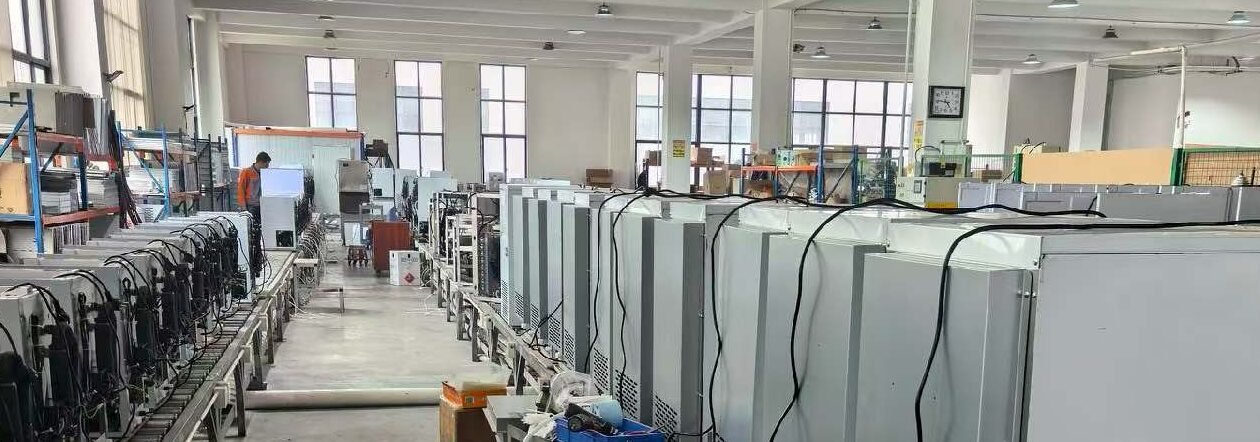
Noise is worth checking in shared labs. Air-cooled units in either format typically run at similar levels, but an auger-based flaker produces a steady scraping sound during production, while a cube machine is quieter during freezing and louder only during the short harvest. If the machine sits near workstations rather than in a utility room, compare the rated decibel levels and consider a remote or split configuration. Water-cooled models are quieter and suit hot, cramped spaces, but they add plumbing and ongoing water consumption.
9. Can You Use Just One Machine for Everything?
A single flake ice maker can handle most laboratory cooling, but it is not ideal for long-duration storage because flake ice melts faster and can clump as it refreezes. A single cube machine can supply storage and transport, but it performs poorly in precision ice baths. Smaller labs standardize on a flaker and simply use insulated buckets for short transport. Large facilities with continuous workflows often run both types, or add a second machine for redundancy so maintenance never interrupts sample handling.
10. Frequently Asked Questions
Do flake ice and cube ice have different temperatures? No — both are wet ice at roughly 0°C. The difference is physical: flake geometry creates far more surface contact, while dense cubes melt more slowly.
Which melts faster, flake or cube ice? Flake snow ice melts faster because of its high surface area, but it also cools vessels faster and more evenly. Cubes last longer in storage and transport.
Can a cube ice maker replace a flaker in a biology lab? Not comfortably for routine ice baths. Cubes leave air gaps and cannot wrap around tubes, so cooling is less uniform. A flaker is the better primary machine for bench work.
Is flake snow ice safe for fragile samples? Yes. Its soft, non-abrasive texture cushions tubes and tissue, whereas hard cubes can chip glass or concentrate pressure on delicate specimens.
Which machine is easier to clean? Both require regular descaling and sanitizing of the bin and contact surfaces. Flake units need more frequent hygiene checks because they stay wet, while cube units are more prone to bridging and jammed harvests if neglected.
Do I need a medical-grade machine? If the ice contacts biological specimens, pharmaceuticals, or regulated materials, specify a laboratory- or medical-grade unit with stainless-steel contact surfaces and documented sanitation rather than a consumer drinks machine.
11. Conclusion
The flake ice maker versus cube ice maker decision ultimately comes down to how your lab actually uses ice. For bench-top ice baths, sample handling, and uniform contact cooling, flake ice is the clear winner and the standard choice for research and clinical labs. For slow-melting storage, bagging, and long transport, cube ice is the practical tool — and many larger facilities run both.
FlyCheng is a specialized ice maker manufacturer offering both flake and cube ice machines for laboratories, hospitals, universities, and research institutes. Sanfort, our laboratory-focused division, provides scientific-grade equipment built for the hygiene, continuity, and precision that research demands. Contact FlyCheng and Sanfort to size the right laboratory ice machine — or a combined flake-and-cube setup — for your facility.
 English
 French
 German
 Spanish
 Japanese
 Korean
 Italian