


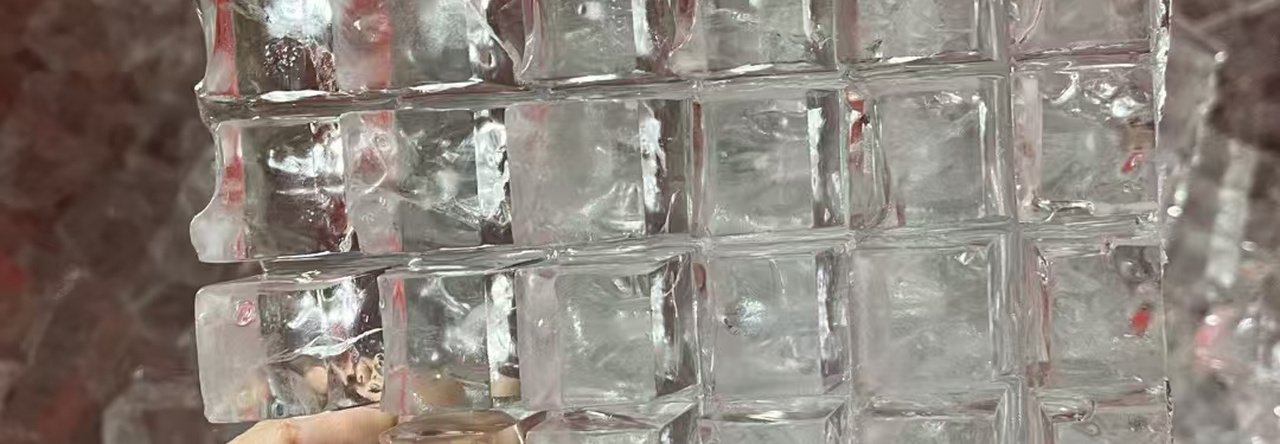
Walk into almost any hotel bar, restaurant, or banquet service and the ice in the glass will be cube ice. That is not an accident. Across the hospitality industry, cube ice has become the default because it solves the problems that matter most to a drinks-led business: it keeps beverages cold without watering them down, looks professional in every glass, and can be produced reliably in large volumes. This article explains why cube ice is the standard for hotels and restaurants, how it compares with nugget and flake ice, and what to look for in a commercial cube ice machine.
1. What Makes Cube Ice Different?
Cube ice is hard, dense, and regularly shaped, typically produced in a square or crescent form on a refrigerated evaporator plate. Because the water is frozen in a controlled, flowing process, the resulting cubes are clear and solid rather than cloudy or air-pocketed. Most commercial full cubes fall in the 22–25 mm range, with adjustable harvest plates allowing slight variations in size and thickness. That density and regular geometry is the foundation of everything cube ice does well in hospitality.
Slow Melting Means Less Dilution
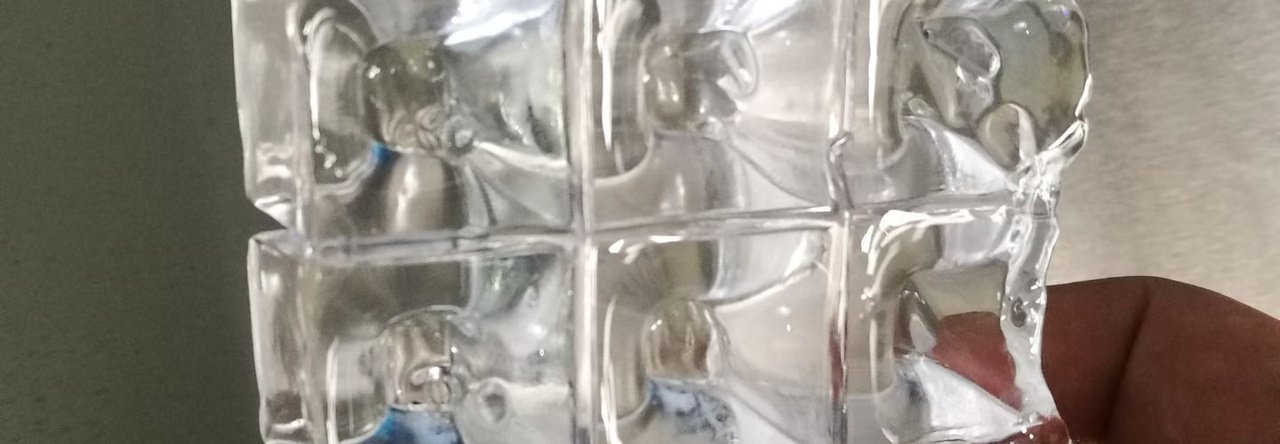
The single most important property of cube ice is its slow melt rate. A dense cube has relatively little exposed surface area for its mass, so it chills a drink while releasing water slowly. For spirits served on the rocks, such as whiskey or bourbon, this is essential: the liquor stays cold without being diluted into a watery, weak drink. The same benefit applies to cocktails that are meant to be sipped and savoured, and to long drinks that may sit on a table through a leisurely meal. Faster-melting alternatives cool quickly but begin to dilute the beverage almost immediately, which changes both taste and strength and can undermine the consistency a bar is built on.
A Professional, Consistent Presentation
Hospitality is a visual business, and cube ice looks the part. Uniform, transparent cubes stack cleanly in a glass, catch the light, and give even a simple soft drink a polished, intentional appearance. Because every batch is the same shape and size, bartenders can build drinks to a consistent standard and guests receive the same experience from the first order of the evening to the last. Cube ice also offers good displacement: solid cubes do not pack as densely as small nuggets, so a glass is not overfilled with ice and the intended beverage volume is preserved.
Reliable Cooling Across High-Volume Service
Hotels and restaurants rarely ask ice machines for small, occasional batches. They need continuous production through breakfast rushes, lunch service, happy hour, and evening banquets, often with many staff drawing from the same bin. Commercial cube ice machines are engineered for exactly this duty, with durable compressors, insulated bins, and automatic controls that keep producing ice throughout the day and shut off safely when the bin is full. Their solid cubes also store well and take up less space per kilogram than softer forms, helping a busy operation hold a useful buffer without an oversized footprint.
2. Cube Ice vs. Nugget vs. Flake Ice
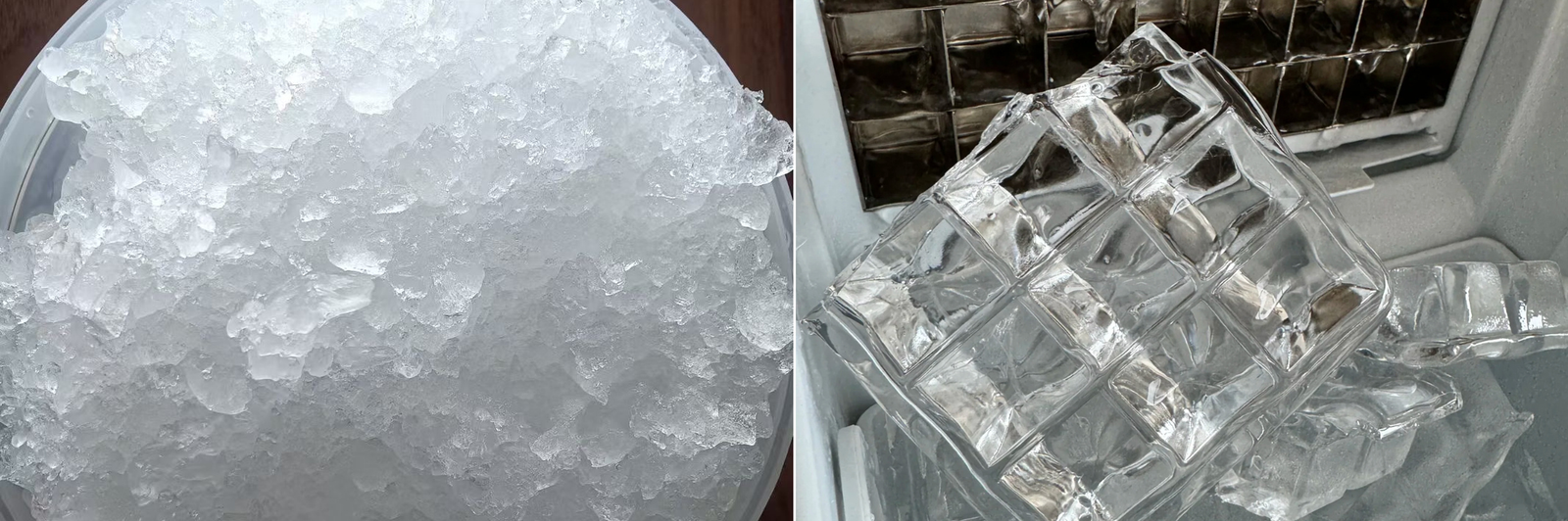
Each ice type has its own strengths, but they serve different purposes. The table below summarizes how they compare for hospitality use.
| Feature | Cube Ice | Nugget Ice | Flake Ice |
| Texture | Hard, solid, clear | Soft, chewable pellets | Thin, soft flakes |
| Melt rate | Slowest | Faster | Fastest |
| Drink dilution | Minimal | Moderate | High |
| Presentation | Professional, uniform | Casual, popular with guests | Best for displays, not glasses |
| Best hospitality use | Drinks, cocktails, spirits | Fountain drinks, smoothies | Seafood display, food prep |
As the table shows, nugget ice is prized for its chewable texture and works well in fast-casual fountain drinks, while flake ice excels at rapid cooling for seafood displays and food processing rather than beverage service. Neither matches cube ice when the priority is slow melting, low dilution, and a professional drink presentation — which is precisely why cube ice dominates hotels and restaurants.
3. Where Hotels and Restaurants Use Cube Ice?
- Bars and lounges: cocktails, spirits on the rocks, and long drinks.
- Restaurant dining rooms: soft drinks, iced water, and iced tea or coffee.
- Banquets and buffets: high-volume beverage service for large groups.
- Room service and in-room hospitality: consistent, guest-ready drinks.
- Conference and event catering: reliable supply across extended serving periods.
4. What to Look for in a Commercial Cube Ice Machine?
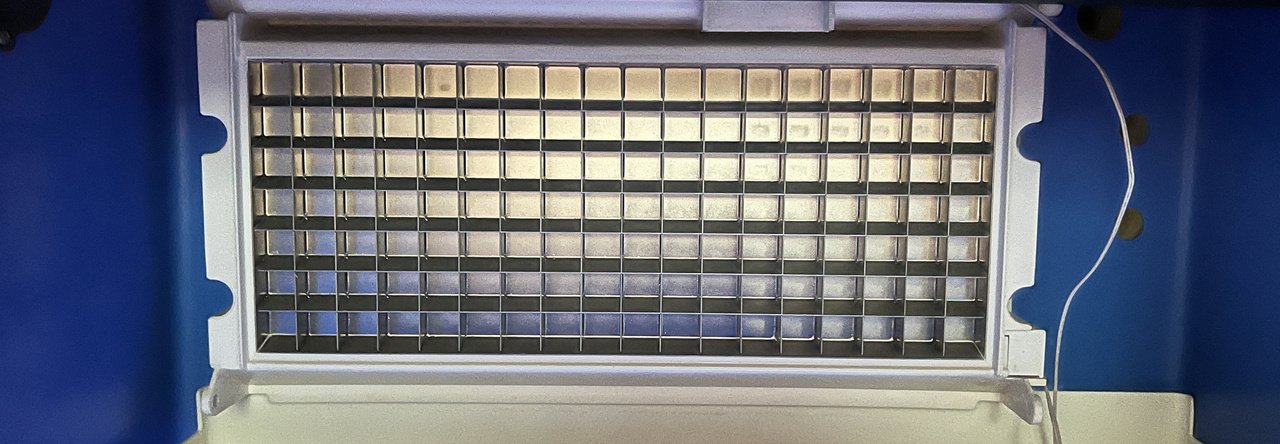
Choosing the right cube ice maker machine protects the quality of the ice and the continuity of service. Start with correctly sized daily production and a bin that buffers peak demand, allowing headroom for warm rooms and busy shifts. Favour food-grade stainless-steel construction for corrosion resistance and easy sanitation, and look for recognized hygiene and safety certifications. Useful controls include adjustable ice thickness, full-bin and low-water shut-off, fault indicators, and automatic restart after power or water interruption. Energy and water efficiency, quiet operation, and a low-GWP refrigerant such as R290 further reduce running cost and support environmental compliance.
5. The Operational and Cost Value of Cube Ice
Beyond drink quality, cube ice makes practical financial sense for a hospitality business. Because cubes are dense and store efficiently, a machine can hold a useful working reserve in a relatively compact bin, reducing the chance of running out during a peak service and the waste that comes with melted, unusable ice. Slow-melting cubes also protect beverage cost: less dilution means drinks retain their intended balance and strength, and solid cubes do not require staff to overfill glasses to achieve the same chilling effect. When an energy-efficient, correctly sized machine is paired with a simple maintenance schedule, the total cost of ownership stays predictable while the equipment supports service every hour the venue is open.
6. Common Misconceptions About Commercial Ice
One misconception is that all ice is essentially the same, so the cheapest machine will do. In reality, ice shape and density directly change how a drink tastes and looks, and a poorly specified machine can create dilution, shortages, or hygiene problems. Another is assuming that daily production figures alone indicate capacity, when the bin size and the timing of peak demand matter just as much. Some operators also underestimate the cost of skipped maintenance, which quietly reduces output and shortens equipment life long before a breakdown. Finally, businesses sometimes choose a softer, trendier ice for every application without recognizing that cube ice remains the better tool for slow-sipped drinks. Treating ice as the operational ingredient it is, rather than a free commodity, helps avoid these errors.
7. Cleaning and Maintenance
Even the best machine performs poorly if it is neglected. Because ice machines stay wet internally, scale and microbial growth can develop over time. Replace water filters on schedule, descale the evaporator when output falls or scale appears, and clean and sanitize the bin and all ice-contact surfaces with approved products, rinsing thoroughly afterward. Keep a dedicated scoop stored outside the bin and document the cleaning cycle. A simple maintenance routine protects ice quality, extends machine life, and helps hospitality businesses meet their hygiene and audit requirements.
Check here to know more about How to Clean a Commercial Ice Maker?
8. Frequently Asked Questions
- Why do hotels use cube ice instead of other types? Cube ice melts slowly, dilutes drinks minimally, and presents a consistent, professional look in every glass, which suits beverage-led hospitality.
- Does cube ice really melt more slowly? Yes. Its dense, solid structure and lower surface area relative to mass give it a slower melt than nugget or flake ice.
- Is cube ice suitable for high-volume service? Absolutely. Commercial cube machines are built for continuous production and durable daily use across bars, restaurants, and banquets.
- How often should a commercial machine be cleaned? Regular filter changes, periodic descaling, and scheduled sanitizing of the bin and contact surfaces are the standard, with documented cycles in regulated facilities.
- Can one machine serve an entire hotel? A correctly sized unit can support a single bar or kitchen, but large hotels with multiple outlets should assess combined peak demand and often specify separate machines or additional bin capacity.
- What size cube is best for restaurant drinks? A standard full cube around 22–25 mm suits most beverage service, while smaller half cubes chill faster for high-volume soft drinks; adjustable machines let operators match the cube to the menu.
9. Conclusion
Cube ice is the standard for hotels and restaurants because it aligns perfectly with what hospitality beverage service needs: slow melting, minimal dilution, professional presentation, and dependable high-volume production. While nugget and flake ice have their own strong applications, neither replaces the cube for drinks that must stay cold, balanced, and visually consistent.
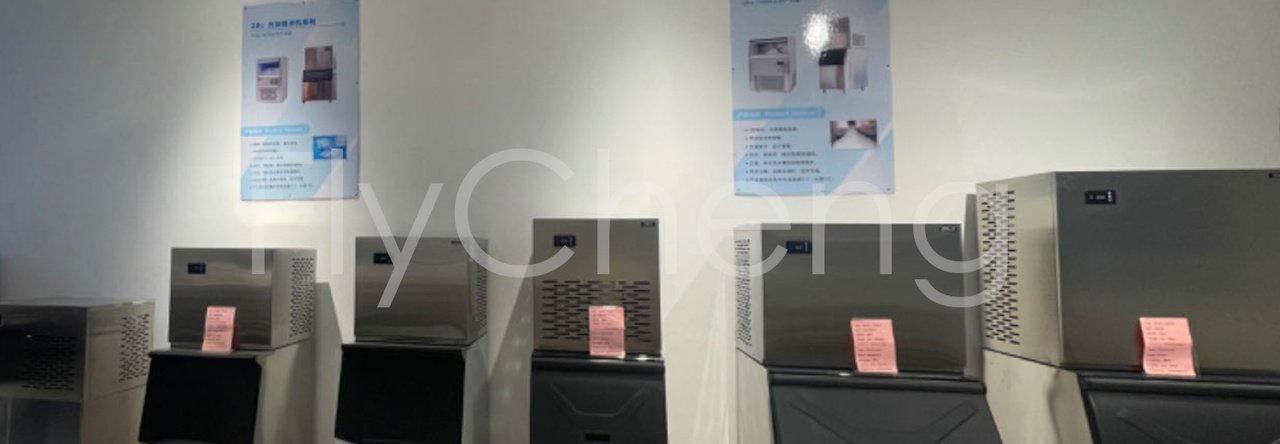
FlyCheng is a specialized ice maker manufacturer supplying commercial cube ice machines for hotels, restaurants, bars, and catering operations worldwide.
 English
 French
 German
 Spanish
 Japanese
 Korean
 Italian